
When a microelectronics or semiconductor lab needs a bespoke wet bench, the challenge isn’t just finding a manufacturer.
The real challenge is to ensure that the solution adapts to the process, is chemically resistant, integrates well into the installation and does not generate future problems of maintenance, collection or reliability.
Therefore, before requesting an offer, it is advisable to validate a series of technical points that will help to make a decision with more criteria and less risk.
Asking for a price too early, without clearly defining the needs, usually leads to a proposal that is not very precise, difficult to compare and more likely to end up in modifications, delays or an insufficient solution.
In this guide we explain what you should check before requesting an offer for a custom wet bench.
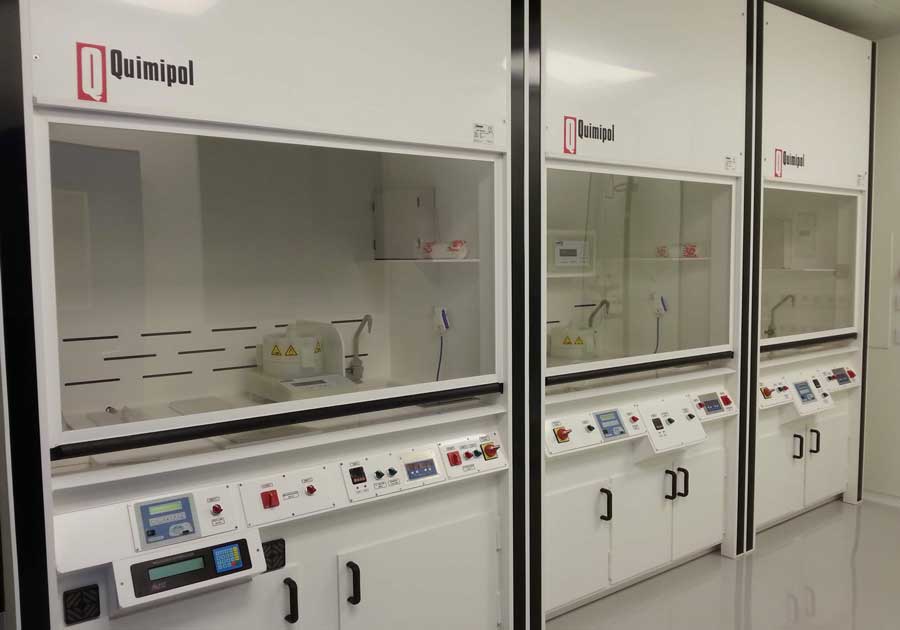
Why shouldn’t you ask for a wet bench offer with just an overview?
The same thing happens in many industrial projects: an offer is requested with a description that is too basic, for example “we need a chemical bench in PP with extraction”. The problem is that this does not define either the level of demand of the process or the real work conditions.
A wet bench should not be valued as standard equipment. In environments with harsh chemicals, corrosive vapors, and sensitive operations, every detail affects performance and durability:
- the type of chemical• the working temperature• the geometry of the equipment• the need for collection• access for maintenance• integration with existing services• the strength of the materials• operational safety
The clearer the initial information, the more useful the technical proposal will be and the easier it will be to compare options with real criteria.
1. Validate the process that the wet bench must solve
Before talking about measurements or configurations, it is necessary to define well what exactly the wet bench should do within the process.
Equipment intended for washing, chemical attack, rinsing, sequential processing or punctual handling of chemical products is not the same. Nor is it the same whether you have to work with manual, semi-automatic operation or in a more integrated sequence within the line.
What will the equipment actually use?
It is necessary to define whether the chemical bank will be in continuous, intermittent or one-off operation. This point affects materials, reinforcements, accessibility and design criteria.
What chemicals will be involved?
This is one of the most critical points. Chemical compatibility should not be taken for granted. You need to know which products the system will work with, in what concentration and under what conditions.
Are there relevant temperatures, vapors, or reactions?
The operating temperature, vapour emission and process behaviour can completely change the requirements of the design.
What level of security does the operation require?
It should be clear whether there is a risk of splashing, vapour generation, the need for containment or additional protection for the operator and the environment.
2. Confirm Material Compatibility
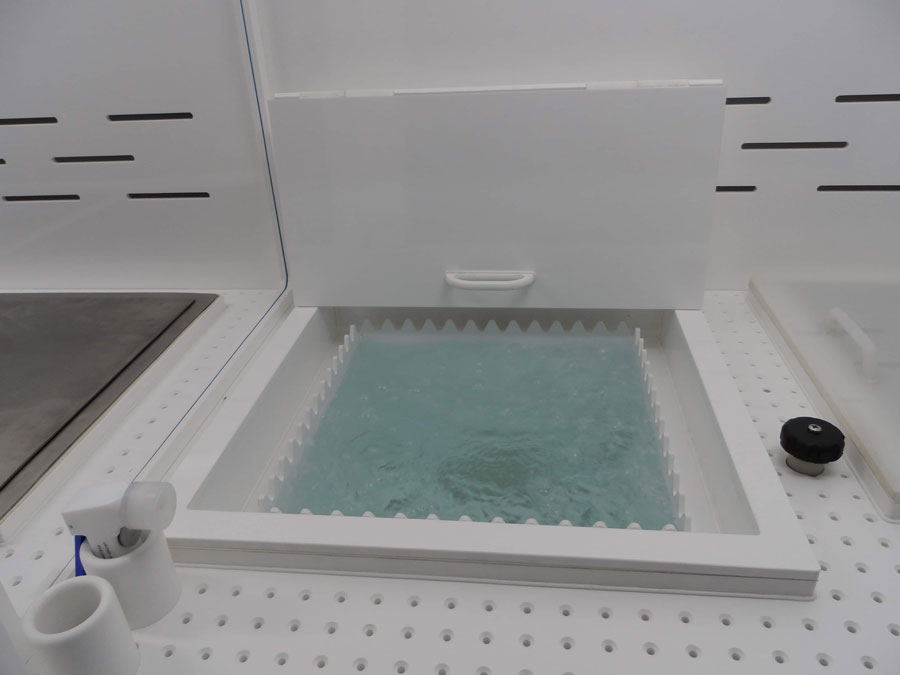
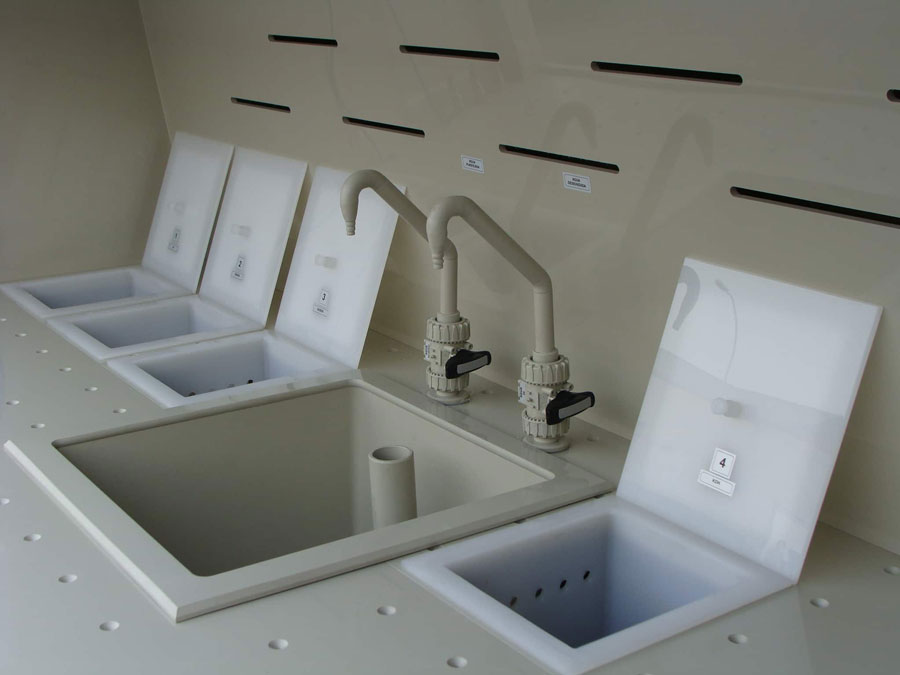
In a custom wet bench, materials become a critical process decision. In many cases, polypropylene (PP) is a very suitable choice due to its chemical resistance and its behaviour in corrosive environments, but it should be assessed according to the application.
The question should not only be “what material is it made of?”, but:
- why this material is proposed• how it will behave with the process chemicals• what durability is expected• if there are critical points in joints, accessories or auxiliary components
It is also important to check that not only the main body of the equipment is adequate, but also the rest of the associated elements: connections, trays, ducts, accessories and integrated components.
3. Review the capture and extraction of chemical vapors
One of the most common mistakes is to focus all the attention on the bucket or the structure of the chemical bench and leave the capture and extraction of chemical vapours in the background.
A wet bench can be well manufactured and, even so, cause problems if the capture is not well resolved. When this happens, inconveniences appear such as:
- exposure to vapours in the work area
- accelerated corrosion in nearby areas
- unwanted condensation
- reduced operating comfort
- reduced process control
Before requesting an offer, it is advisable to be clear:
What type of recruitment does the process need?
Not all processes require the same thing. The configuration of the collection must respond to the actual generation of vapours and the way the operator works.
Where will the air be evacuated?
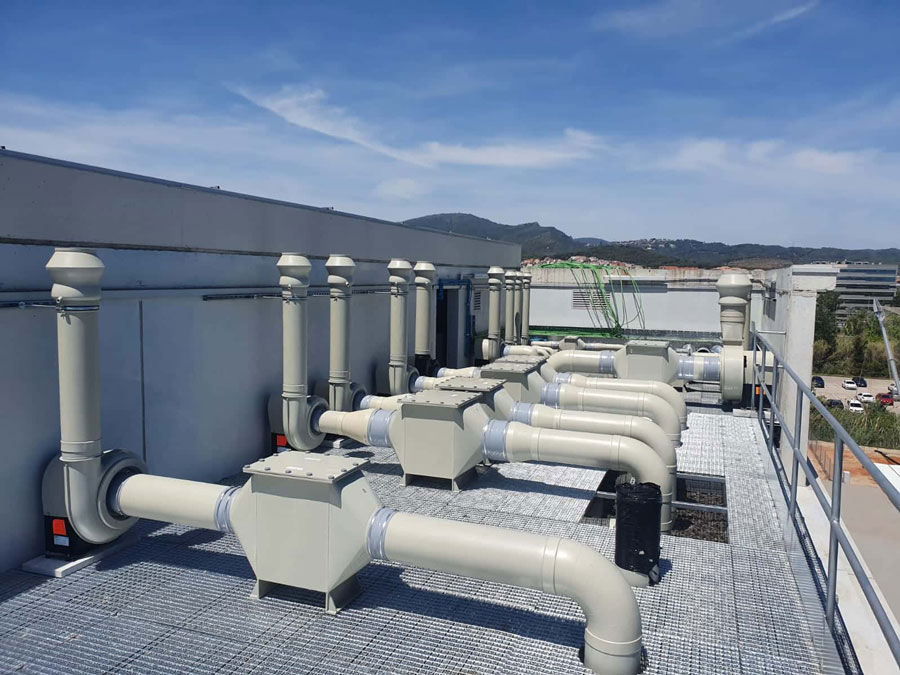
You need to know if the system will connect to an existing network, if it needs new conduits in PP or if it will require a dedicated system.
What flow rates and functional criteria should be taken into account?
The proposal should be aligned with the expected performance and with the actual limitations of the installation.
Will gas treatment be necessary?
Depending on the type of steam or emission, it may be necessary to consider integration with a filter or other gas treatment system.
4. Study well the integration of the wet bench in the installation
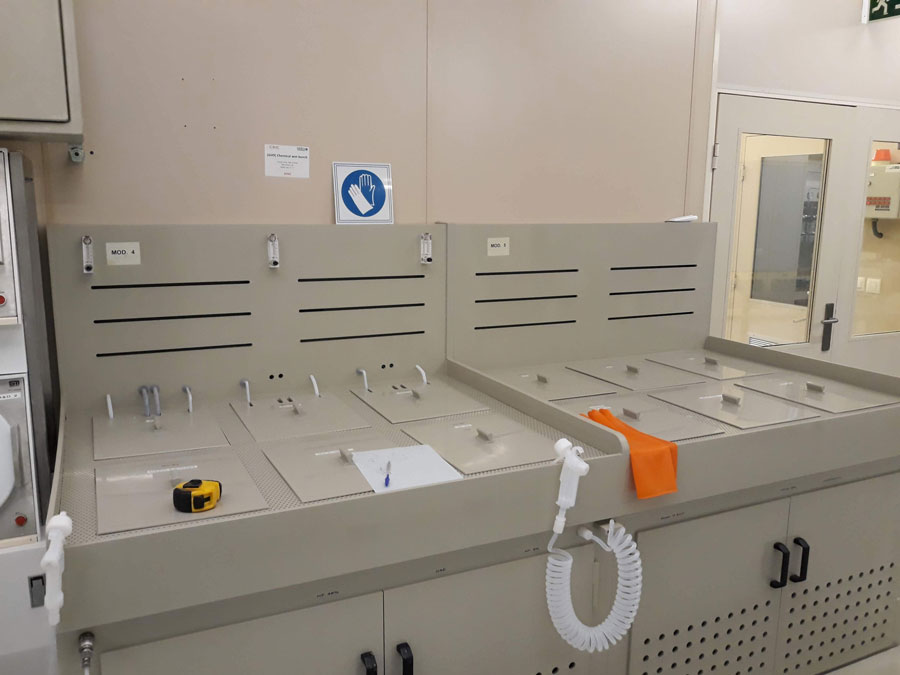
A wet bench should not be designed as an isolated piece of equipment. It must fit into a concrete reality: available space, staff operations, existing connections, auxiliary services and accessibility.
Before requesting an offer, it is key to review:
- Available space in the plan
- Accesses for entry, assembly and maintenance
- Connection points to water, drainage, electricity or extraction
- Heights, corridors and interferences
- Relationship with other nearby equipment
- Room or process line constraints
This point is especially important in retrofit projects or replacement of existing equipment, where the implementation margin is usually tighter.
5. Think about maintenance
Many problems arise because maintenance has not been taken into account from the beginning. A piece of equipment may look right off-plan, but be uncomfortable or expensive to maintain once installed.
Therefore, before requesting an offer, it is advisable to ask yourself:
Can it be easily cleaned?
This is basic in sensitive chemical environments.
Will there be good access to components or records?
Ease of access reduces intervention times and operational risk.
Does the design help to minimise incidents?
A good design not only solves the process, it also helps reduce unnecessary maintenance.
Are the elements on display meant to last?
This includes not only the materials, but also the construction configuration, joints and critical points.
6. Request useful technical documentation, not just a business proposal
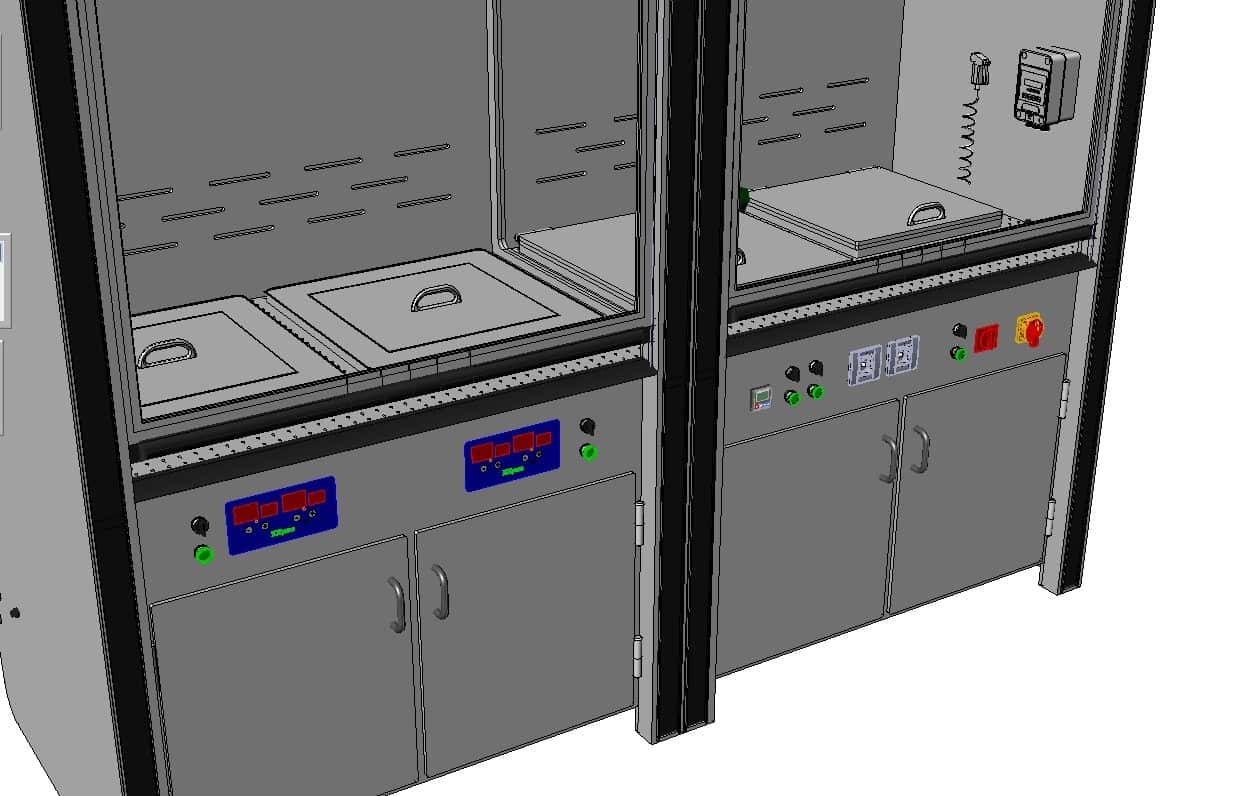
A technical customer doesn’t just need a quote. You need information that allows you to assess whether that solution is consistent with your process.
When you request an offer for a custom-made chemical bench, it is recommended that the proposal be accompanied, whenever possible, by useful technical documentation, such as:
- General scheme of the solution
- Preliminary drawings or indicative dimensions
- Proposed materials
- Capture or extraction criteria
- Connection points• Integration observations
- Maintenance considerations
- Manufacturing options or conditions
A clear proposal reduces internal doubts, facilitates validation and helps to compare more rigorously.
7. Be clear about what you want to compare between offers
When multiple offers come in, you’re often not comparing the same things. One may include catchment and another may not. One may propose better materials and the other only the minimum. One may contemplate integration and the other may limit itself to manufacturing the bench.
To avoid misleading comparisons, it is advisable to define beforehand:
- Exact scope of the offer
- Materials and configuration
- Capture system
- Accessories included
- Integration needs
- Expected documentation
- Assembly constraints
- Maintenance criteria
This allows us to assess not only the initial cost, but also the technical coherence and the real cost in the medium term.
8. Signs that your project needs a truly tailor-made solution
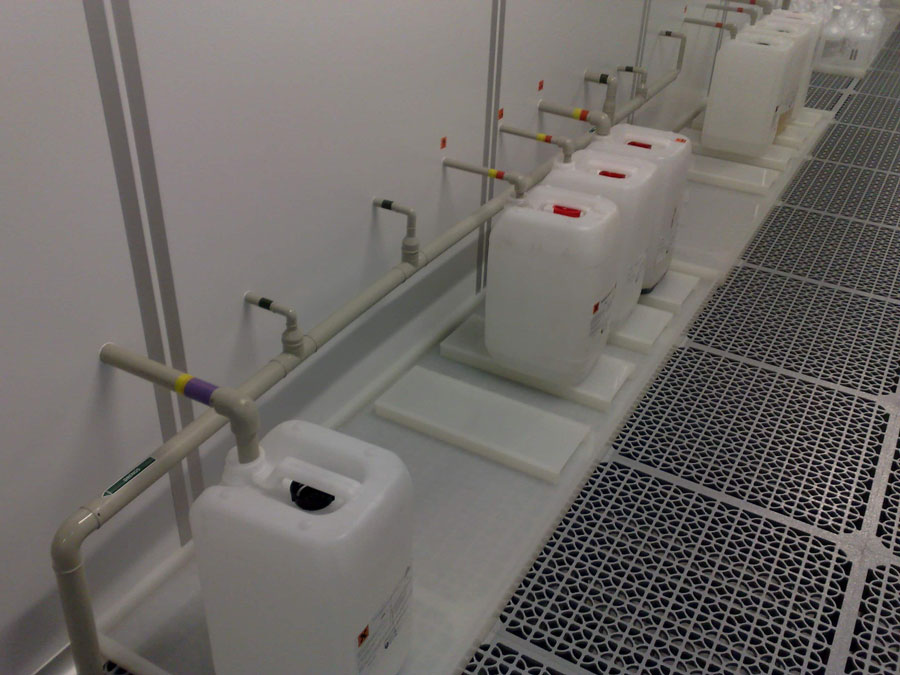
Not all chemical banks require the same level of adaptation, but there are very clear signs that indicate that a standard solution may fall short:
- You work with aggressive chemicals or demanding combinations
- There are specific catchment requirements
- Space is limited
- The equipment needs to be integrated into an existing installation
- You need to minimise maintenance or risk of corrosion
- There are internal technical validation requirements
- The process does not tolerate improvisations
In these cases, a custom-made manufacture is not an extra. It is the reasonable way to reduce risks.
What should you prepare before contacting a supplier?
To speed up the study and receive a more useful proposal, it is advisable to prepare this information:
Minimum recommended data
- Description of the process
- Chemicals involved
- Working temperature
- Indicative dimensions
- Photos or plans of the area
- Need for extraction or collection
- Available services
- Access and maintenance constraints
- Term or context of the project
With this basis, the proposal is usually much more precise and useful from the beginning.
Conclusion: a good wet bench starts before the offer
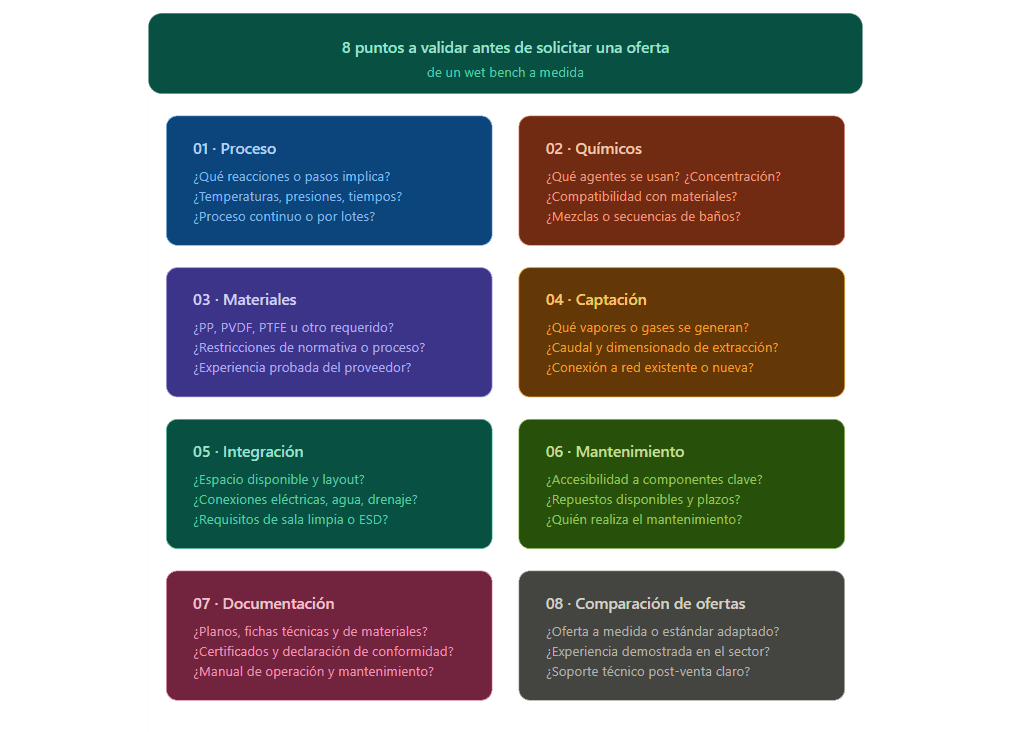
Requesting an offer from a tailor-made wet bench without first validating the key points is taking an unnecessary risk. In microelectronics and semiconductor environments, the solution must be built on technical criteria: process, materials, capture, integration, maintenance and documentation.
It’s not just about getting a price. It’s about making sure that the proposal will respond well in an environment where reliability, safety and chemical resistance are crucial.
When these aspects are well defined from the outset, it is easier to receive a consistent offer, compare options judiciously and move towards a solution that does not complicate either the validation or the future operation of the installation.
At Quimipol, this type of project is studied precisely from this logic: first understanding the process and then defining a really appropriate technical solution.
Are you considering a wet bench for your process?
If you need a custom wet bench, at Quimipol we can help you review the critical points before defining the proposal.
Explain your project to us and we will help you assess the most suitable solution according to process, materials, integration and chemical resistance.
Quiero estudiar mi wet bench
About the Author
Sergi Vinuesa – Responsable Comercial en Quimipol / Sales Manager at Quimipol
